
Virtually one particular-3rd of very low-revenue Asian ladies now dwell in states with confined abortion access
 [ad_1]
When a young Rohingya woman touched down in New York in 2018, she assumed she experienced last but not least attained protection — the conclusion to an arduous lifelong journey of fleeing persecution with no considerably choice.
The lady, who requested to be anonymous for anxiety of retaliation, had used the earlier several many years of her everyday living oppressed as a Muslim in Myanmar and as undocumented in Bangladesh, and she finally bought what minimal she had to vacation to the U.S. All the although, she experienced two children in tow, and her husband was physically and sexually assaulting her, she claimed through a translated interview with her advocate at Asian Spouse and children Guidance Services of Austin.
Telling her tale as a result of an advocate, she said she hoped to start around in this region. But she swiftly understood it was not the safe and sound haven she had dreamed of. With no dollars, authorized documentation or any examining or crafting techniques, the family was detained and then sent to a shelter in Austin, Texas.
In the midst of all that, she got expecting. And she didn’t want to be.
“Fear, stress and anxiety and guilt was preserving me up at evening and was sitting down heavy on my upper body," the girl reported in Bangla, translated by her advocate. "Deep down I was sure that we ended up incapable financially of bringing a new baby into this world."
Texas, like a lot of other states, had abortion regulations that were now restricted before the Supreme Court overturned Roe v. Wade this 12 months. The woman had to move fast.
She was afraid, she stated, and there ended up a lot of issues holding her back — stigma, religion and the worry her spouse would locate out she was expecting. But chief among the them was income. She would go on to have an abortion, concealed from her husband, by funds raised by neighborhood users.
“Getting an abortion had a fiscal expense to it, but now that charge has primarily tripled," said Rachna Khare, the executive director of Daya, a Houston-spot survivors firm.
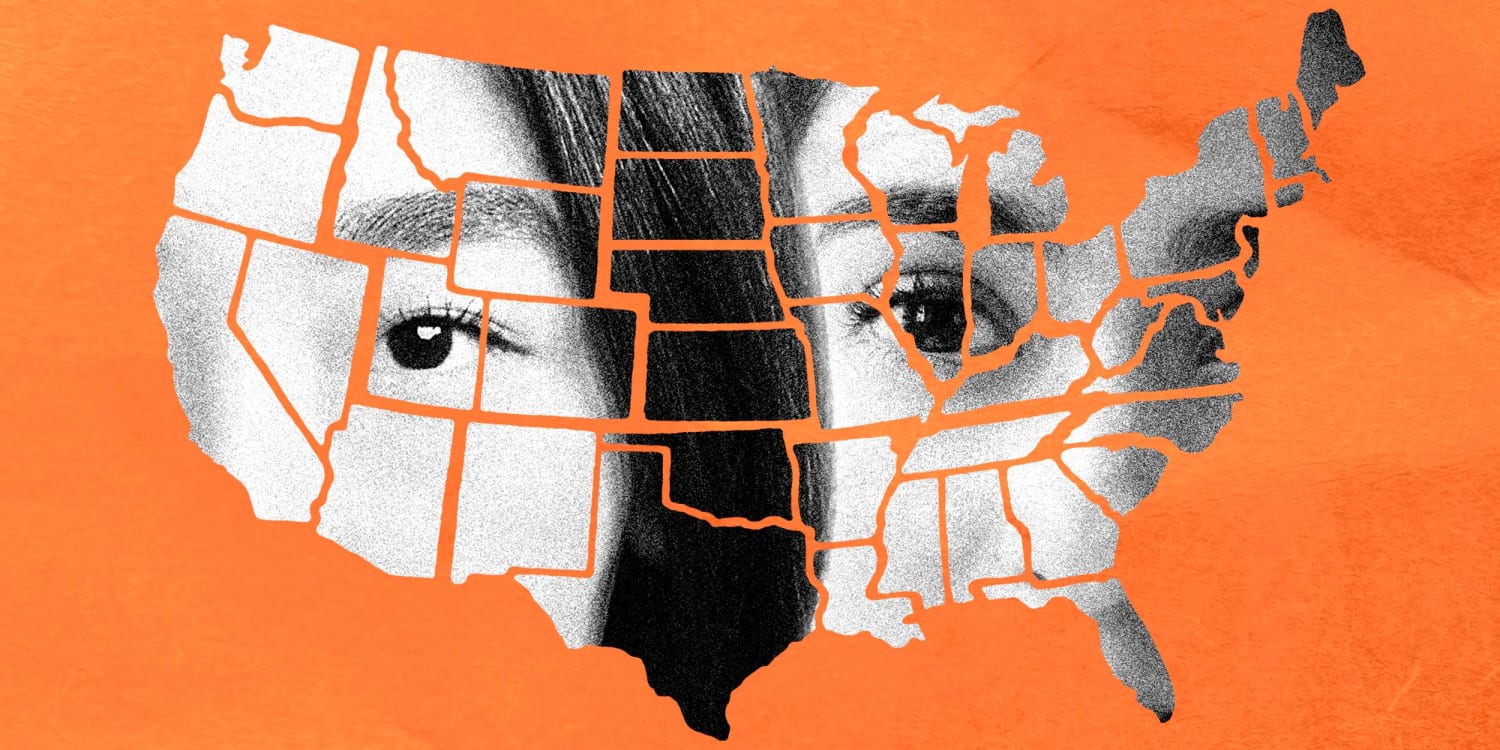
According to new facts from the Nationwide Partnership for Women & Families and an G3 Box News News analysis, 31% of lessen-revenue Asian females of reproductive age dwell in states that have banned or are established to ban abortions. With reproductive treatment turning out to be harder to accessibility just about every working day, authorities say the most vulnerable teams will be the most crippled — and face the starkest effects.
“She had this rosy photograph that The usa is a land of prospect and things will completely transform for her,” Samira Ghosh, the Rohingya woman's advocate, mentioned about her client. “But she did not want an excess mouth to feed and one more baby to deliver to this world, since they had been presently having difficulties.”
Renewed cycles of poverty
Lower-earnings Asian women fall at the intersection of quite a few obstacles when it arrives to getting any health care, experts say: Language, coverage, immigration status and money all perform roles in earning fundamental necessities inaccessible.
When it will come to reproductive treatment and abortion entry, cultural stigmas compound these aspects.
“It’s not as uncomplicated for them to select up the cellular phone and phone a close friend or phone a relative and say, ‘Hey, I need to go get an abortion a few states absent,’” claimed Yvonne Hsu, the chief policy and federal government affairs officer at the National Asian Pacific American Women’s Discussion board.
The new report by the National Partnership for Women of all ages & Family members reveals that several Asian teams that drop underneath the poverty line are closely concentrated in areas wherever abortion is totally banned. For all those communities, the abortion laws of just a single point out could have an impact on large pieces of the inhabitants, it explained.
Close to half of all Pakistani women of all ages and 40% of Vietnamese women of all ages in the U.S. are living in Texas, where abortion is practically fully banned. In Wisconsin, 17% of all Hmong American women of reproductive age are up against equivalent laws.
“This is on best of what’s currently a great deal of discrimination that they’ve seasoned in health care,” claimed Lelaine Bigelow, the vice president of social influence and congressional relations for the Nationwide Partnership. “When they stroll into a doctor’s business as is, they’re facing companies that may possibly or may possibly not look at them in the very same way as other communities.”
Indian ladies are the largest group of Asian American and Pacific Islanders impacted by Roe’s overturn, with 362,000 of them dwelling in states that have banned or are probably to ban abortion. Although the amount is smaller sized for Myanmar females — about 25,200 — it comprises the the greater part of their populace in the U.S.
“It’s been truly disheartening to have to acquire an selection away, because there are already so several alternatives readily available,” Khare reported.
Asian stories are concealed in the knowledge
Concrete information describing Asian Americans’ abortion activities is mostly unavailable and unclear. Typically lumped into an “other” classification, Asian American and Pacific Islander knowledge is not typically highlighted. Even when it is, information for person ethnic groups is not identifiable. The new report is 1 of the 1st meaningful seems industry experts have gotten at access to reproductive treatment across Asian American and Pacific Islander ethnicities.
A study this calendar year by the Guttmacher Institute, a pro-abortion-rights study firm, uncovered that the abortion rate for Asian females in the U.S. is 12.6 per 1,000 ladies. It’s a little quantity when as opposed to the standard population, but when taken aside, it tells a unique tale. Greater-earning initial-era teams tend to have increased charges of abortion. Communities with fewer money, coverage and English proficiency have reduce costs.
“The boundaries are money and also accessibility to details,” Khare explained.
‘It becomes practically impossible’
The Rohingya lady in Texas was hoping to request an abortion in mystery. If her spouse observed out, she would be in difficulty. On major of that, having time off function, finding youngster care and touring someplace for the working day was not in her means. Now, they are basically conditions for any woman in a banned condition who demands care.
“You have to assume about the treatment expense by itself, touring to a condition that allows an abortion, and then exactly where are you heading to remain and get transportation when you’re there,” Khare explained. “Also, safe abortions require observe-up appointments following two to 3 months. … When you’re in an abusive connection currently being viewed so intently, it results in being nearly difficult.”
Immediately after she unsuccessful to get assistance from mutual resources in the spot, Ghosh started crowdfunding to aid get her shopper the abortion she necessary.
“Everybody questioned their close friends for, like, $50, $100, and we came up with the income so she could access it,” she explained. “But then the challenge was recovery and her missing from property the whole working day.”
Even transportation was an problem. Due to the fact she didn’t know how to read or publish, getting a thing like the right bus to acquire depended on pattern recognition by yourself.
The girl sooner or later got her abortion. But the rushed timeline meant there was not considerably time to deal with her tracks. Her partner found out, and Ghosh stated it led to a awful bout of abuse.
“That was another massive calamity and beating,” she claimed.
The looming dread of at-property abortions
Khare mentioned she fears for the ladies she works with, supplied the authorized tightrope several are battling to walk and the achievable threats to contraception on the horizon.
“What background has shown us is that when people today try to acquire a healthcare method like abortion into their very own hands, it turns into wholly unregulated and for that reason wholly unsafe,” she explained.
It requires all the means of survivors corporations and mutual resources to make positive that ladies don’t start off making an attempt at-dwelling abortions, she mentioned. Providing them with resources to safely and securely get aid, defend their privateness and travel out of condition is getting a emphasis.
“They’re navigating almost nothing short of lawful chaos,” stated Katherine Gallagher Robbins, a senior fellow at the National Partnership for Females & Families.
New abortion guidelines will unquestionably have impacts, reported Hsu of the National Asian Pacific American Women’s Forum, but for gals used to boundaries, the bans are worsening a dilemma that has constantly existed.
“Even prior to the tumble of Roe, for communities of coloration, which includes the Asian American Pacific Islander local community, the ideal to abortion under no circumstances assured obtain,” she reported. “You believe about a mother, someone that functions a reduced-wage position that doesn’t enable for paid out leave, who may possibly not have standing and who could need to have to vacation out of state. There’s a dread of criminalization, in addition you add on a layer of stigma.”
All all those hurdles build a chilling effect, professionals say, and now, the repercussions they will have on Asian girls are getting clearer.
[ad_2] https://g3box.org/news/health/virtually-one-particular-3rd-of-very-low-revenue-asian-ladies-now-dwell-in-states-with-confined-abortion-access/?feed_id=7739&_unique_id=630e296a17fc2

0 comments:
Post a Comment