
AMD FSR 1. vs. FSR 2.: Which upscaling tech need to you use?
 [ad_1]
We want our cake, and you bet we’re ingesting it as well! What gamer does not want lovely graphics and higher frame fees? AMD’s FSR, or FidelityFX Tremendous Resolution, does just that by working with upscaling know-how.
To compete with Nvidia’s DLSS (or Deep Learning Tremendous Sampling) in the fight for the very best graphics cards, AMD has introduced FSR 2.0—but the first FSR is sticking close to and however greatly accessible. Ought to you be employing FSR 1. or FSR 2.? Realistically, you’ll very likely wind up using both of those relying on what is out there in a offered video game, as recreation builders will need to actively help these systems, and there are plusses and minuses to each. Just like we did with FSR versus AMD’s Radeon Super Resolution, let’s just take a seem at how FSR and FSR 2. look at.
AMD FSR 1. vs 2.: Essential discrepancies
AMD’s FSR 1. was a terrific initial attempt, employing a basic spatial upscaling technological know-how that renders sport visuals at a lessen resolution for a lot quicker effectiveness, then upscaling the graphic to fit your check resolution. Going a stage even further, FSR 2. now employs temporal upscaling, which takes motion information from a number of frames to recompose the image and get as shut as probable to the meant graphical excellent of the first. (If this seems like NASA communicate, really do not worry, it’s quite successful in exercise.) And if you’re a Steam Deck lover, FSR 2. can help there far too!
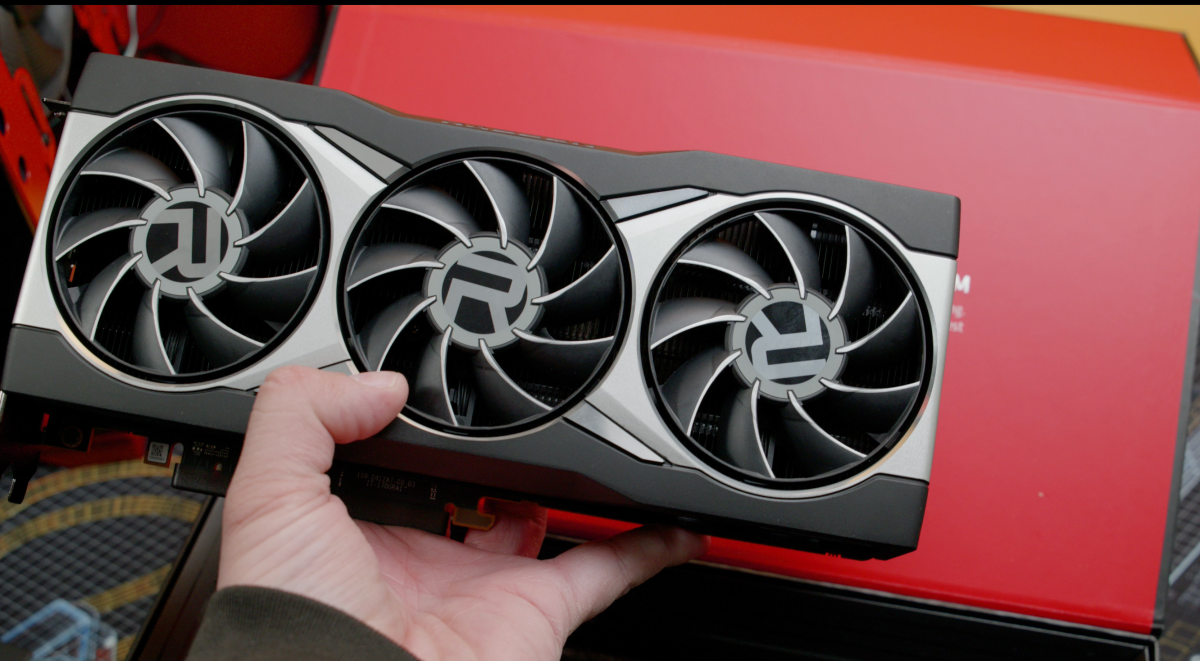
Deciding on concerning AMD’s FSR 1. and 2. will largely depend on your hardware.
Thiago Trevisan
FSR 1. performs very well at better 1440p and 4K resolutions, but lacks visible fidelity at reduce resolutions this kind of as 1080p. FSR 2. enormously improves on that, providing improved impression high quality across all resolutions.
How about activity availability? Blended, FSR 1. and FSR 2. combined are in well about 110 video games to date, but the wide vast majority of those use the prolonged-established unique iteration. FSR 2., becoming far more new, is gradually creating up aid. Some online games, these types of as Deathloop, can use both FSR 1. and 2..
FSR 1. can even now maintain some frame fee benefits, primarily on more mature components, as opposed to the extra demanding FSR 2. tech. In common, FSR 2. will glance far better graphically across the spectrum. It’s definitely better on contemporary hardware, and in most circumstances is the most effective alternative. That mentioned, whilst the initially-gen FSR runs on all types of more mature graphics cards, the advisable GPU listing for FSR 2. is substantially a lot more stringent (even though AMD takes pains to point out that given that FSR 2. is an open know-how, and these are in fact just recommendations).
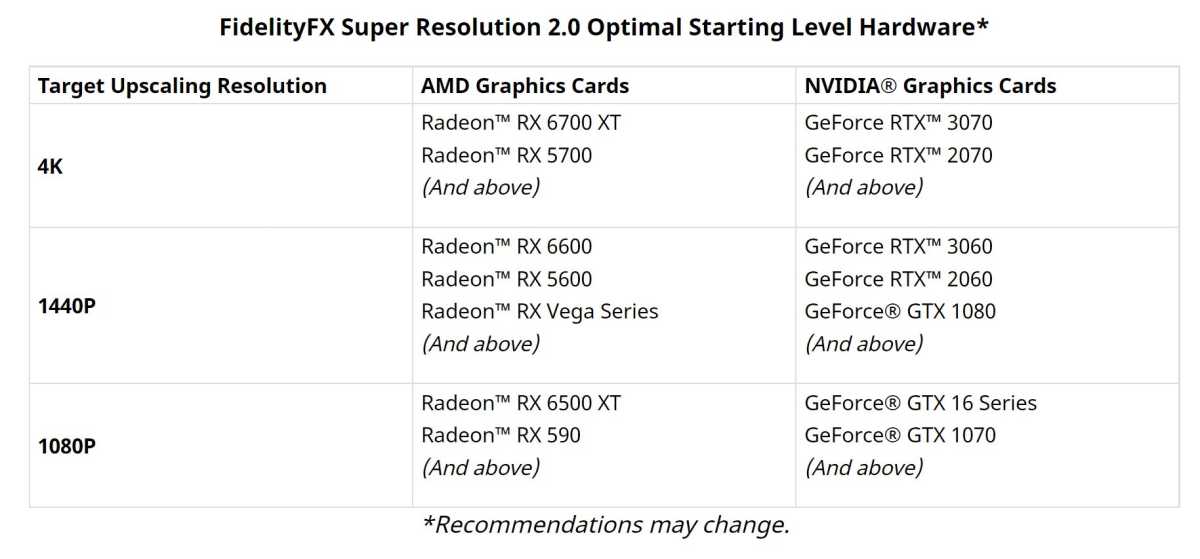
AMD
These are not to be confused with AMD’s identical RSR, or Radeon Tremendous Resolution, which is based mostly off FSR 1.. RSR isn’t as successful, but can be implemented at the driver level—meaning you can convert it on in virtually any activity, and not just games in which builders actively built-in help.
Regardless, activating FSR is commonly uncomplicated on supported titles—you’ll see an solution in the game menu. You can also generally pick between various presets that will dictate bigger image good quality vs . raw effectiveness gains.
FSR 2. vs. Nvidia’s DLSS
If you’re fearful about synthetic intelligence eventually turning on individuals, you will want to adhere with FSR 2.. Nvidia’s DLSS employs equipment learning managing on dedicated tensor main components, compared to the additional direct and curated open-resource solution of AMD’s FSR 2..
When Nvidia’s DLSS has improved over time and an argument can be made for its dominance and very best-in-class effectiveness, FSR 2. is also no slouch and has its rewards. The two technologies are quite equivalent in practice.
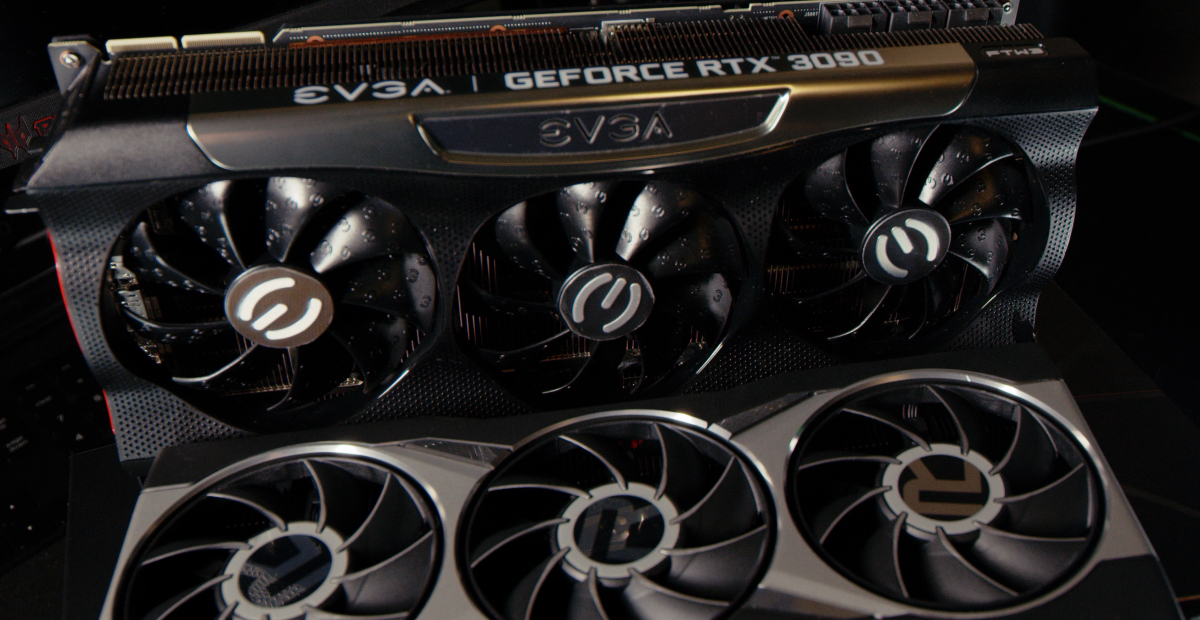
AMD’s FSR 2. retains its possess versus Nvidia’s much-vaunted DLSS.
Thiago Trevisan
FSR 2. can be employed in a a lot wider array of hardware, with the two Nvidia and AMD GPUs supported. DLSS needs Nvidia’s RTX GPUs and their mighty tensor cores to do the heavy lifting. On the other facet of the coin, DLSS enjoys a substantial and expanding library of game titles, and both equally AMD and Nvidia’s technologies can coexist in some games. FSR 2. does look a lot quicker to employ, so we could see a speedily escalating listing of supported titles as it gains acceptance more than time.
AMD FSR 1. vs 2.: Which should really you use?
When it comes to no matter whether you must use AMD’s FSR 1. or 2., the answer relies upon on your components, your intention, and what your preferred sport supports. If you are enjoying on an more mature, significantly less-powerful GPU, there are instances when you’ll get a lot quicker speeds from FSR 1.. In common, you’ll get considerably far better graphical excellent on FSR 2., primarily on extra present day components. (If you’re on a high-close Nvidia RTX graphics card, you are going to most possible continue to want to use DLSS if your match supports it.) You’ll have to do some demo and error if your activity supports a number of upscaling systems considering that there are numerous variables at play, which include your specific components and even how FSR is applied on a for each-match foundation.
Base line, though? We’d frequently propose utilizing FSR 2. around the initial FSR if it’s offered. Delighted upscaling!
[ad_2] https://g3box.org/news/tech/amd-fsr-1-vs-fsr-2-which-upscaling-tech-need-to-you-use/?feed_id=8468&_unique_id=63172761e5d16

0 comments:
Post a Comment