
How to benchmark your graphics card
 [ad_1]
Absolutely sure, benchmarking your graphics card may perhaps seem like rocket science, but it is not as tricky as you could possibly think. Roll up your sleeves, simply because this guide will demonstrate you just how quick, pleasurable, and critical it is to benchmark your GPU. And not just when you’re overclocking! We’ll go over benchmarking for both security and efficiency.
For even far more info, be positive to look at out our roundup of the very best graphics playing cards, as effectively as our supplementary guidebook to the ideal GPU benchmarking computer software.
Why you really should benchmark your GPU
1st, however, here’s why you ought to be benchmarking your graphics card even if you are not attempting to make it to the prime of the competitive overclocking charts:
- To get a baseline general performance metric so that you know if your GPU is performing as it ought to by comparing to other normal effects.
- To be able to examine your current PC’s general performance versus your future hardware updates. How significantly general performance will you acquire by shopping for a new graphics card? Now you’ll know!
- To verify for security and other vitals like thermals, clock speeds, etc.
First, check for balance and temperatures
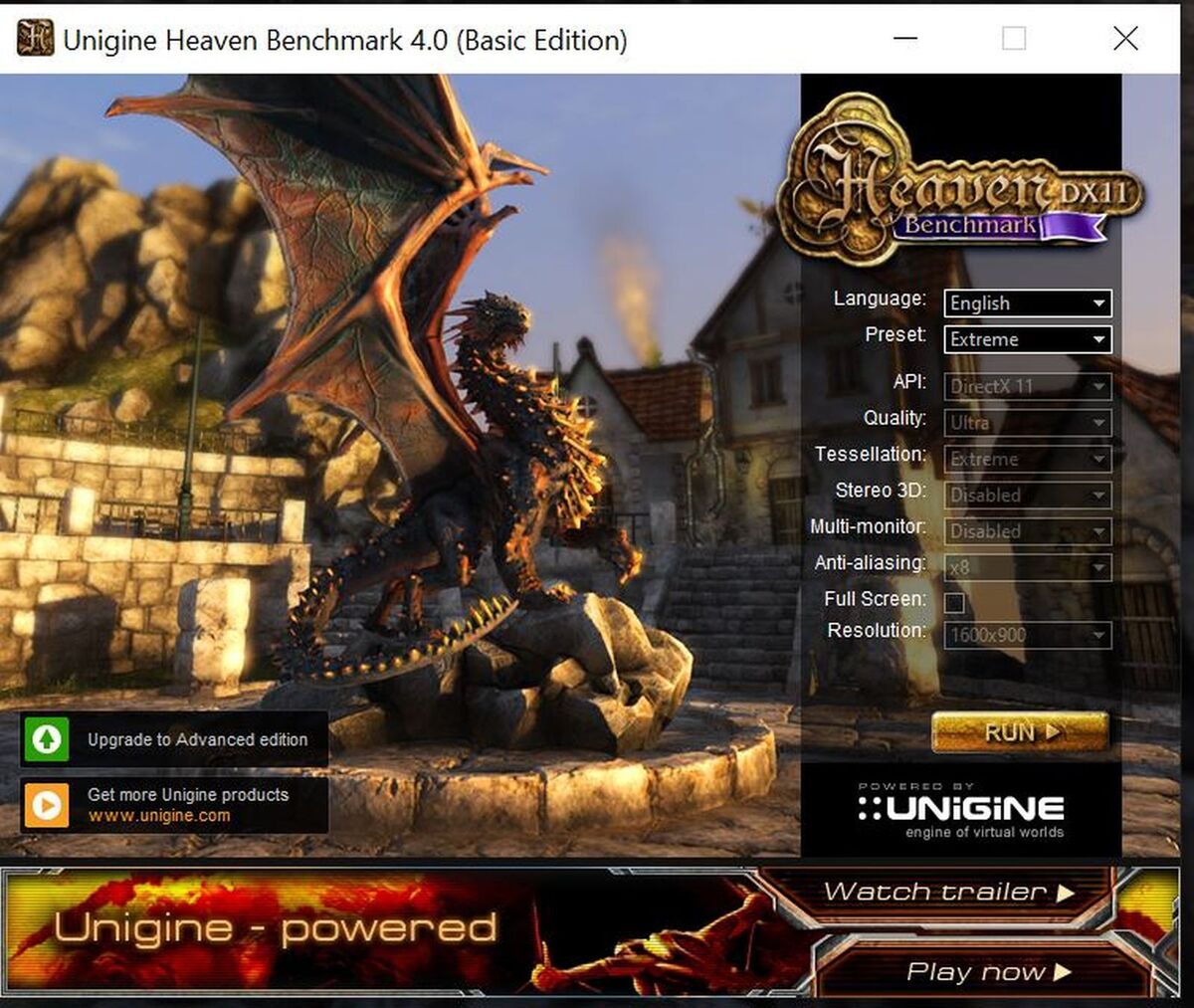
Unigine’s Heaven benchmark
Now that you know why you need to benchmark, it’s time to get into the how. Let us start out with stability and vitals. It’s scarce, but at times a graphics card can be faulty from the factory. That can suggest a lifeless card, but in lots of cases you’ll get what are named “artifacts”—basically imperfections on the picture, flickering, or even pulsating hues.
The initially system we’re likely to use is Unigine Heaven 4.. It’s free for own use and operates a loop of a graphical setting that definitely utilizes your GPU. The initially buy of business here is to make confident your graphics card can run with out shutting down or displaying any strange graphical glitches, so you should really let it to run Heaven for at the very least 30 minutes, to let the GPU to get up to temperature.
If all appears to be like excellent, you’ll also want to continue to keep an eye on the vitals, Those people will be displayed in the leading appropriate corner, alongside with your GPU data.
The initial critical is temperature, which can reveal a variety of possible troubles with your hardware and situation airflow. If your GPU immediately reaches its highest temperature limit, it could point out a uncommon (but attainable) problem with its thermal paste, or (more probably) limited airflow in your case if there isn’t more than enough clearance for the followers to get interesting air.
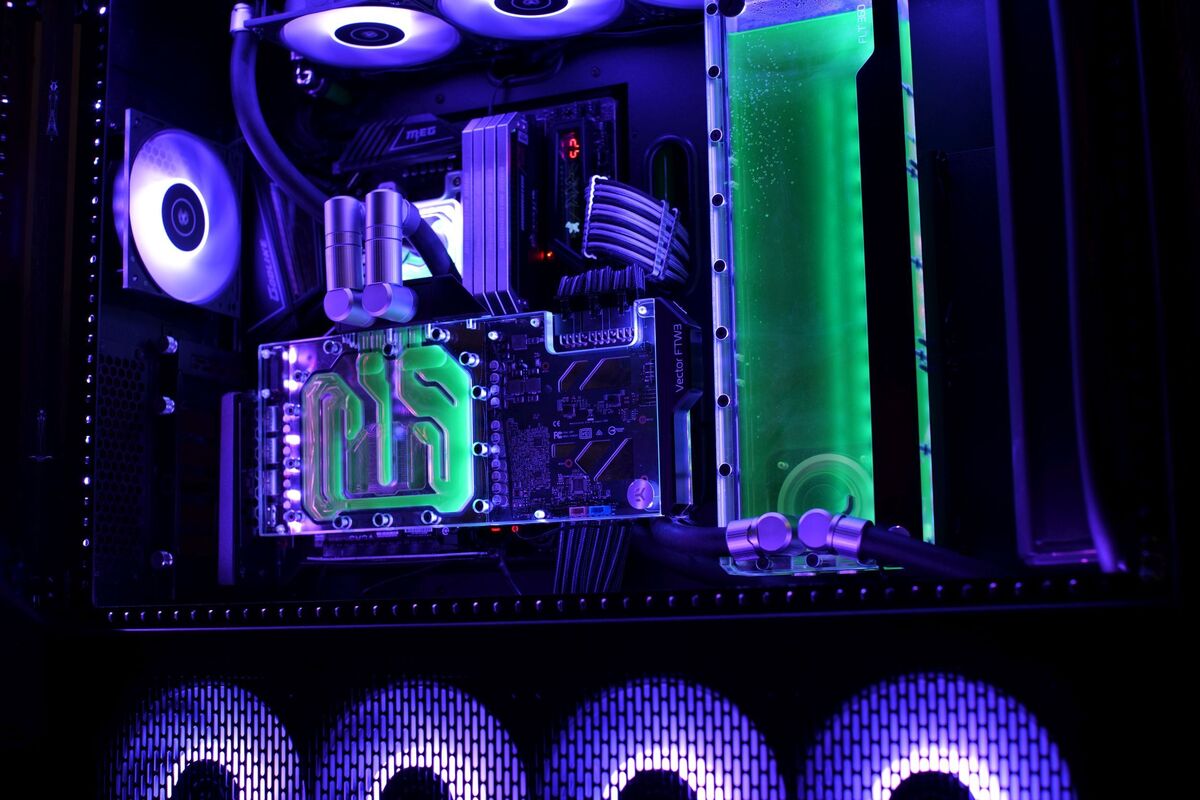
A personalized liquid-cooled GPU setup designed by the author.
A good illustration of recent challenges have been in the GDDR6X memory temperatures of Nvidia’s GeForce RTX 3090 Founders Version. You’d never know with no anxiety-tests the GPU that the memory can get really close to the VRAM temperature limit, likely throttling your functionality. (Some people have properly up to date their thermal pads and seen a sizeable improvement)
How do you know the regular functioning temperature for your graphics card’s GPU core? It may differ by model (Google your GPU title for concrete facts) but simple reference-design and style coolers can often run as significant as 84 Celsius, while some larger sized graphics cards with significant warmth sinks and several fans—like EVGA’s excellent FTW3 series—can be decreased in the 60s and 70s. You’ll know if you are in the threat zone if your temperatures are in the increased 80s, and your lovers are spinning aggressively this typically will show poor circumstance airflow. Increase some fans or open some scenario panels and temperatures really should improve. Which is a immediate profit of information gained although benchmarking and screening your GPU.
You can also retain an eye on the core clock and memory clock of your GPU, to make guaranteed it is carrying out in the vicinity of the meant specs. An easier way is to just operate the benchmark possibility in Unigine Heaven, and then you can assess your score with other individuals on the net and get a fantastic baseline to make absolutely sure you are in the ballpark.
How to benchmark your GPU to gauge baseline efficiency
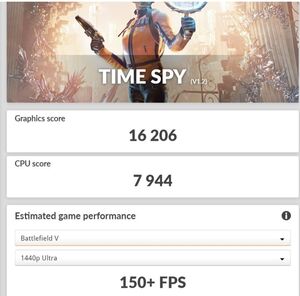
An instance of 3DMark Time Spy scores and approximated activity overall performance.
After you’ve tested for steadiness and thermals, you can choose your benchmarking degree up to a doctorate by testing performance. Below we’ll use the well-liked 3DMark benchmarking suite, which consists of some free of charge modes. Time Spy (which assessments DirectX 12 graphics general performance) and Port Royal (ray tracing overall performance) are some of the most broadly used benchmarks about. 3DMark even has an on line corridor of fame where by you can compare your scores towards other people!
What numbers should really you hold an eye on? It’s straightforward. There’s one particular whole rating, and then different individual scores for the CPU and GPU if you’re running Time Spy. Port Royal just has GPU scores and a full rating. If you make a tweak to a element in your Laptop, the specific scores give you a greater thought of the have an effect on it has on the complete score. (This especially handy if you’re wanting to overclock. Just take a appear at our post on Nvidia’s Automatic overclocking tool in GeForce Practical experience.)
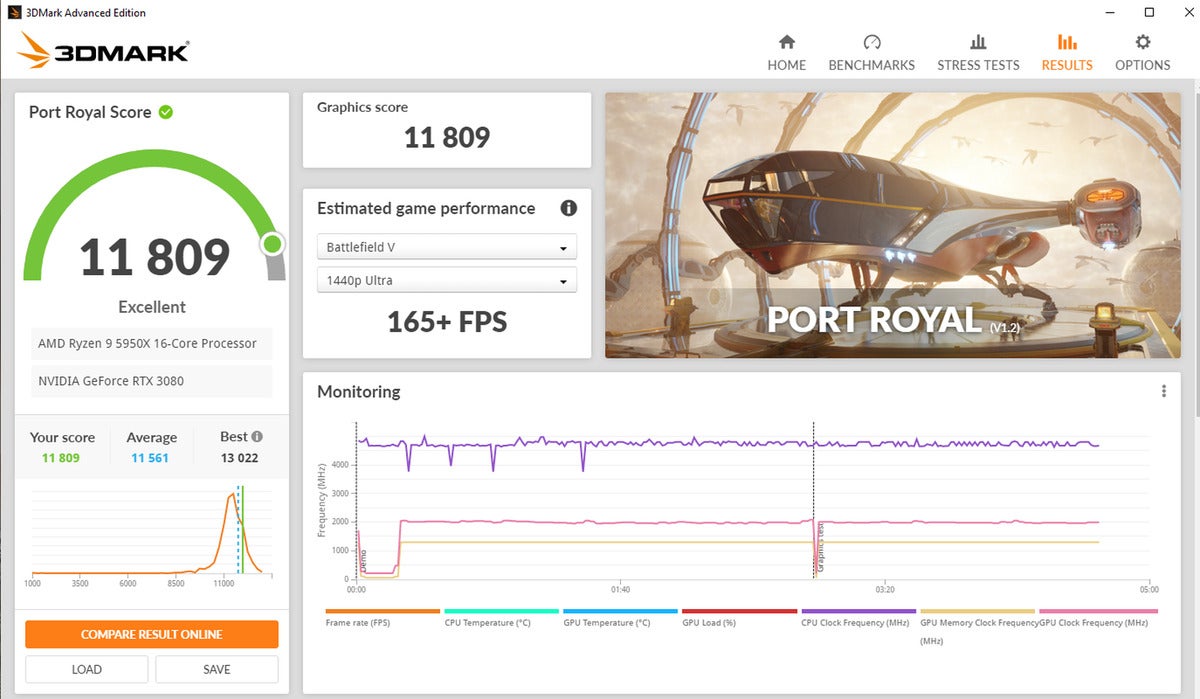
A complete site of scores and final results for 3DMark’s Port Royal exam.
3DMark mark can also show you the approximate frame charge general performance you’d get on a picked out recreation and resolution, which is very handy details to gauge your overall performance and review it against what new updates may accomplish for you. If you’re accomplishing some overclocking, functioning 3DMark can also reveal instabilities in your process, these types of as crashes, so you can alter your numbers and consider again.
How to benchmark your GPU in games
One more really pleasurable way to benchmark your GPU is to use the automatic benchmarks constructed into a lot of online games. (Check out out our GeForce RTX 3080 Ti overview to see some prevalent kinds, or the list of game titles with constructed-in benchmarks at the always amazing Computer Gaming Wiki.)
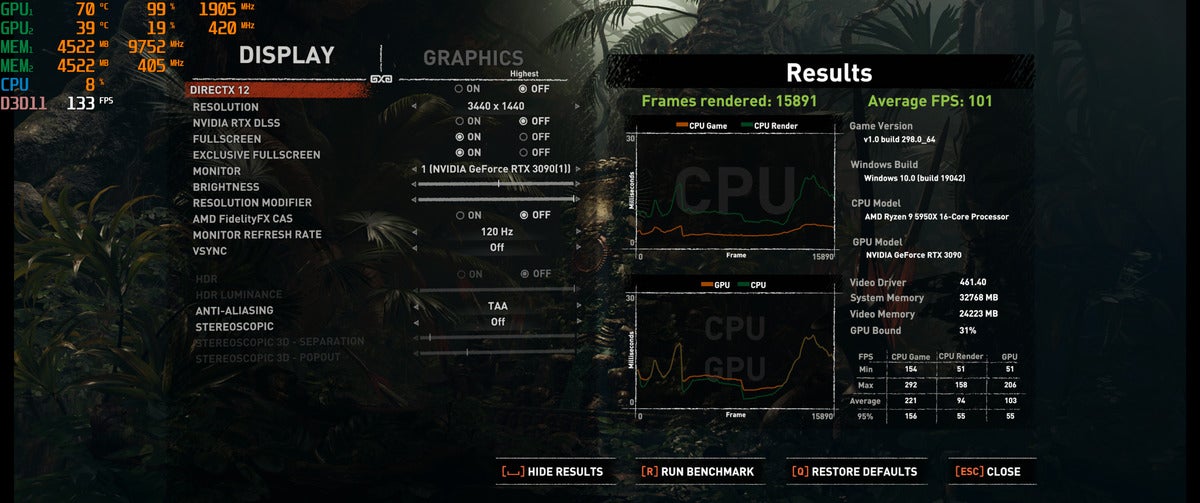
The effects overview from Shadow of the Tomb Raider‘s created-in benchmark.
Shadow of the Tomb Raider is a favored of mine for the reason that you can conveniently see the frames per 2nd efficiency that you are acquiring in each and every scene, providing you a good indicator of how the recreation will run total. As a bonus, if you update your graphics card or other Laptop components, you can re-run the benchmark and you will know just what gains you have netted.
Extra state-of-the-art gamers can use computer software these as Fraps or OCAT to manually benchmark efficiency of games that really don't have a built-in benchmark, but this will need additional time, screening, and figuring out a repeatable screening scenario to stay clear of likely scene-to-scene variance.
Recreation on.
There you have it! You’ve graduated to GPU benchmarking professional. Now you know how to check that your graphics card is secure and thoroughly working, how to validate general performance quantities to make positive your GPU is up to spec, and how to gauge the baseline functionality of your components for future improve comparisons. And who is aware of? You may appreciate benchmarking so much, you will switch it into a pastime!
[ad_2] https://g3box.org/news/tech/how-to-benchmark-your-graphics-card/?feed_id=8384&_unique_id=6315ecbb11b7b

0 comments:
Post a Comment